
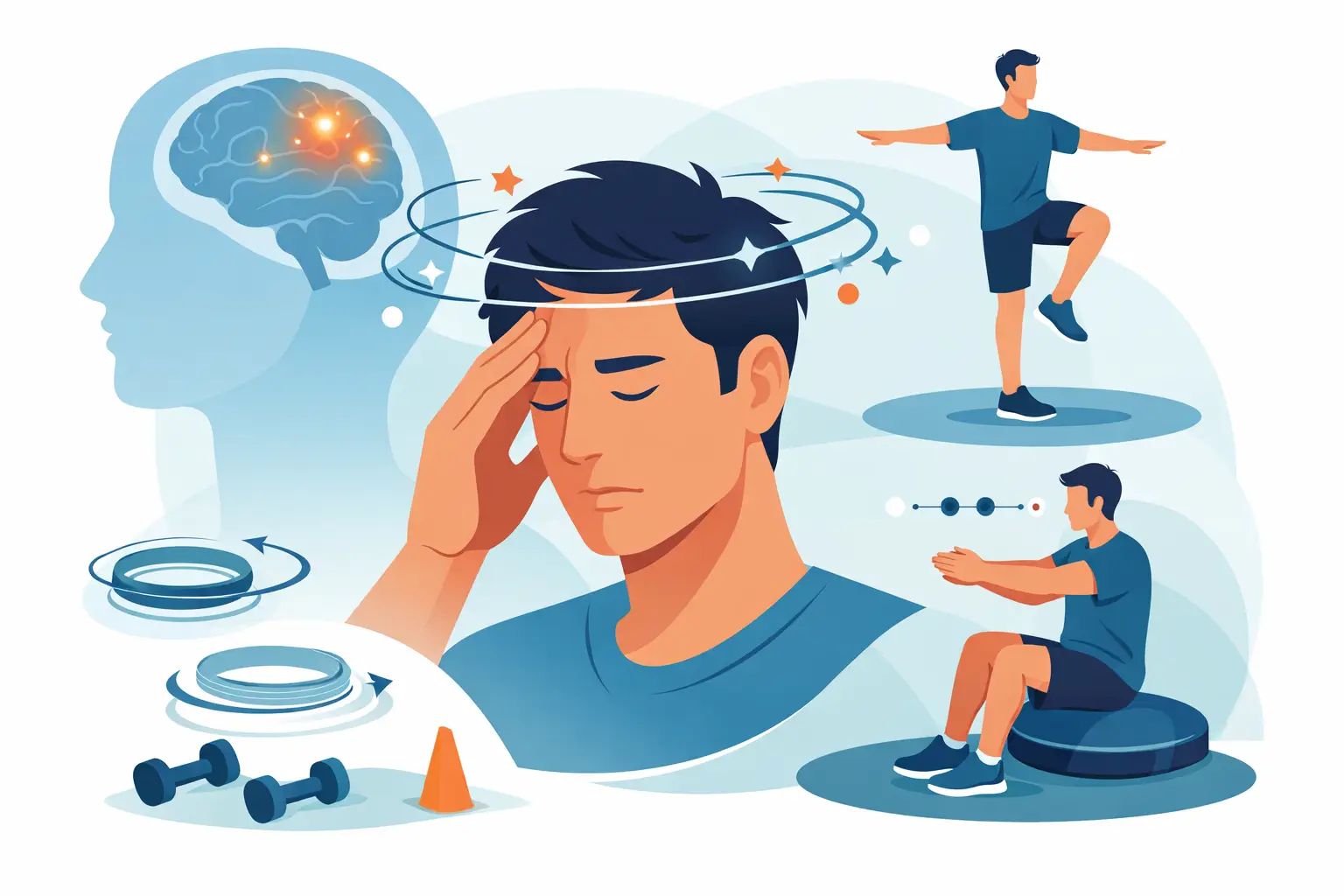
That off-balance feeling after a concussion can be unsettling in a very specific way. You may be able to walk, work, and get through the day, yet still feel foggy, lightheaded, or thrown off by quick head turns, busy stores, screens, or stairs. Vestibular physical therapy can help address these symptoms by identifying how your balance, eye movements, and response to head motion may be contributing to dizziness. Concussion dizziness treatment exercises can help, but they work best when they are matched to the reason you feel dizzy in the first place.
Dizziness after a concussion is not one single problem. For some people, it comes from the vestibular system in the inner ear and brain. For others, it is tied to visual motion sensitivity, neck dysfunction, balance control, or a combination of all three. That is why a rushed, generic handout often falls short. A good rehab plan starts with a detailed assessment, then builds the right exercises at the right dose.
Why dizziness happens after a concussion
After a concussion, the brain may have trouble processing movement, position, and visual input as smoothly as it did before. You might notice symptoms when you roll in bed, look up, scan across a room, walk in a crowded environment, or move your head while reading. Some people describe spinning. Others feel rocking, swaying, pressure, nausea, or simple unsteadiness.
The cause matters because treatment is different depending on what is driving the symptoms. If you have benign paroxysmal positional vertigo, or BPPV, the right treatment is usually a repositioning maneuver rather than general balance drills. If your eyes and head are not coordinating well, gaze stabilization may help more. If your neck was strained in the same injury, cervical treatment may need to be part of the plan. It depends on your symptoms, your medical history, and how your body responds during testing.
When concussion dizziness treatment exercises help most
Exercises are often useful when dizziness is triggered by movement, visual stimulation, or reduced tolerance to head motion. They can also help when balance has become less automatic and your body is relying too heavily on vision to stay upright. The goal is not to push through symptoms at any cost. The goal is to retrain the system gradually so your brain becomes less reactive and more efficient.
That process usually includes one or more categories of rehab. Habituation exercises reduce sensitivity to movements that provoke symptoms. Gaze stabilization improves control of eye and head movement. Balance training challenges the body in a safe, progressive way. If neck symptoms are part of the picture, mobility work, deep neck muscle retraining, and manual therapy may also be important.
Common exercises used in concussion rehab
Gaze stabilization
This is one of the most common tools for post-concussion dizziness. A simple version involves looking at a target in front of you while turning your head side to side, then up and down, without letting the target blur too much. The movement starts small and controlled. Over time, speed, duration, and position can be progressed.
This exercise can be very effective, but dosage matters. Too little may not create change. Too much can flare symptoms for hours. A mild increase in dizziness during the exercise can be acceptable, but a strong spike that lingers is usually a sign to adjust the speed, range, or time.
Habituation exercises
If certain motions consistently trigger symptoms, repeated and graded exposure can help reduce the brain’s sensitivity. This might include turning in bed, bending forward, looking up, or changing positions from sitting to standing. The exact movement is chosen based on what brings on your dizziness.
The key here is precision. Rehab should target your actual triggers, not random motions. Done properly, habituation can help the nervous system stop overreacting to movements that have become threatening or uncomfortable since the concussion.
Balance retraining
Balance work may start with feet together, semi-tandem, tandem stance, or standing on one leg. It can progress by changing the surface, closing the eyes, adding head turns, or practicing walking tasks. Some people also need dual-task training, such as walking while turning the head or following visual targets.
This part of rehab matters because dizziness often changes how people move. You may stiffen up, slow down, or avoid certain environments. Balance exercises help rebuild confidence and restore more automatic movement patterns.
Visual motion and tolerance training
Busy visual environments can be a major trigger after concussion. Grocery store aisles, traffic, scrolling on a phone, or moving through crowds may bring on dizziness or nausea. In these cases, exercises may include controlled exposure to visual motion, tracking tasks, or head movement paired with visual focus.
This is another area where progression is important. If the exercise is too easy, it may not help. If it is too intense, it can leave you drained for the rest of the day. A tailored progression tends to work better than trying to force your way through symptoms.
Exercises that should not be self-prescribed
Not every dizziness exercise is safe to start on your own. If your dizziness is caused by BPPV, using the wrong movement pattern can make things worse or simply waste time. Repositioning maneuvers need to match the affected canal and side. Likewise, if your symptoms involve severe headache, double vision, fainting, neurological changes, or major neck pain, you need a proper medical and physical assessment before starting a program.
There is also a practical issue. Two people can both say, “I feel dizzy,” while needing completely different treatment. One may need vestibular rehab. The other may need more emphasis on cervical treatment, pacing, or exertion-based recovery. This is why assessment comes first.
What a guided rehab plan usually looks like
A strong concussion rehab plan should feel personal, not generic. At LiveWell Physiotherapy, this type of care starts with listening closely to your full story, including how the injury happened, what triggers symptoms, how long dizziness lasts, whether the neck is involved, and what daily activities are being affected.
From there, treatment is built around the findings. You may start with one or two carefully chosen exercises rather than a long list. That often surprises patients, but it makes sense. Early rehab is about accuracy and tolerance, not volume. As symptoms settle and movement improves, exercises can be advanced to match work, driving, fitness, and everyday demands.
Hands-on treatment may also be part of the plan if neck stiffness, joint restriction, or muscle tension is contributing. This combined approach often works better than exercise alone, especially when dizziness and neck symptoms overlap after a motor vehicle accident or fall.
How often should you do concussion dizziness treatment exercises?
There is no single schedule that fits everyone. Some exercises are done several times a day in short sets. Others are better once daily or every other day, depending on how reactive your system is. In general, consistency matters more than intensity.
A common mistake is doing too much on a good day, then paying for it later. Another is avoiding symptoms completely and never giving the brain a chance to adapt. The right middle ground is usually a mild, temporary symptom increase that settles reasonably quickly after the session. Your therapist should help you find that line.
Signs your program needs to be adjusted
A rehab plan should evolve as you recover. If your exercises trigger severe symptoms, if you feel wiped out for the rest of the day, or if there has been no change after a fair trial, something may need to shift. That could mean the diagnosis needs another look, the dosage is off, or another contributing factor such as the neck, vision, or exertion intolerance has not been addressed enough.
On the other hand, if the exercises feel easy and your day-to-day dizziness is improving, progression is usually the next step. That may include faster head movement, more challenging balance tasks, or return-to-activity training that matches your job, workouts, or daily routine.
When to seek professional help
If dizziness is lingering after a concussion, interfering with work or driving, or making you avoid movement, it is worth getting assessed. If you have been searching for vestibular therapy near you, a professional assessment can help determine whether vestibular rehabilitation is appropriate for your symptoms. The earlier the right problem is identified, the easier it is to build a treatment plan that fits. You should also seek prompt medical attention if dizziness comes with worsening headache, repeated vomiting, new weakness, fainting, slurred speech, or other concerning neurological symptoms.
Recovery is rarely about one magic exercise. It is usually about finding the true source of the dizziness, then progressing treatment in a way your body can handle. With the right support, many people can improve steadily, regain confidence in their movement, and get back to daily life without feeling like every turn of the head is a setback.
If you are dealing with post-concussion dizziness, the most helpful next step is often a focused assessment to determine whether vestibular physical therapy may be appropriate for your symptoms and what to do next. At Livewell Physiotherapy & Rehab, our physiotherapy team can assess your symptoms and develop a personalized rehabilitation plan based on your needs. Contact us today to learn more about your treatment options and take the next step toward getting back to your daily activities.
Leave a Reply