
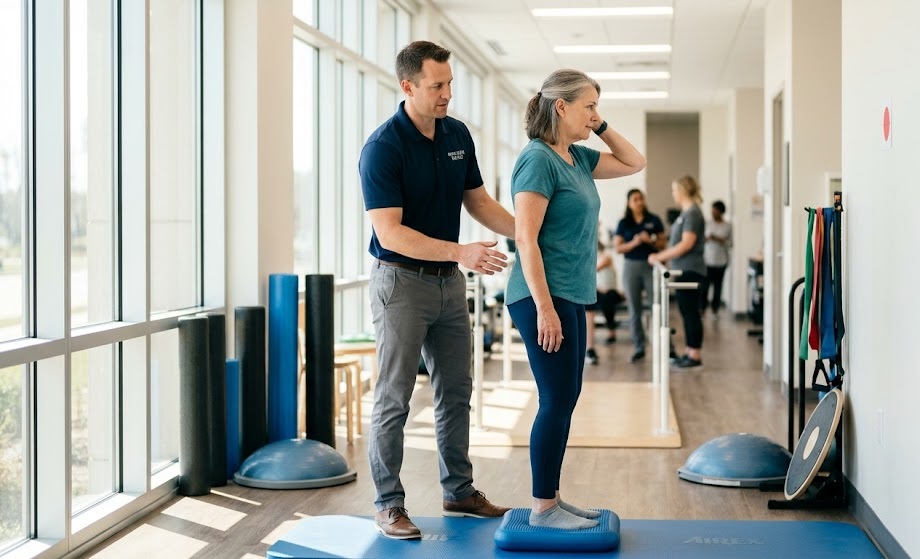
Dizziness is one of those symptoms that people often try to ignore at first. A moment of imbalance, a brief spinning sensation, or a wave of lightheadedness is easy to dismiss as tiredness, dehydration, or stress. But when these sensations return, persist, or begin to interfere with daily movement, they often point to something deeper within the body’s balance system.
The inner ear plays a central role in how you understand motion, stability, and orientation. When it is disrupted, even simple actions like turning your head, standing up, or walking through a busy room can feel unpredictable. This is where vestibular physical therapy becomes an important part of recovery. Let’s talk about it in detail.
Understanding Why Dizziness Happens
Dizziness is not a single condition. It is a symptom that can come from multiple sources, most commonly the vestibular system in the inner ear. This system works closely with your eyes and muscles to help the brain understand where your body is in space.
When this system is affected, the brain receives conflicting signals. You may feel like the room is moving even when you are still, or you may feel unsteady when walking in straight lines. Common vestibular conditions include BPPV, vestibular neuritis, Meniere’s disease, and post-concussion dizziness. Each of these affects balance differently, but they share one thing in common: the brain struggles to interpret movement correctly.
For many people, these symptoms do not resolve on their own. Instead, they continue in cycles, sometimes triggered by simple movements like looking up, bending down, or rolling over in bed.
When Normal Dizziness Becomes a Pattern
Occasional dizziness can happen to anyone. Standing up too quickly or skipping meals can cause short-lived symptoms. But vestibular-related dizziness feels different. It often repeats in specific situations or appears without warning. You might notice:
- A spinning sensation when turning your head
- Unsteadiness while walking in crowded places
- Nausea triggered by movement or visual motion
- Difficulty focusing when your head moves
- A lingering sense of imbalance even when still
These patterns suggest that the brain and inner ear are not working in sync. Instead of correcting itself immediately, the system becomes sensitive to movement, creating a loop where fear of dizziness can also increase symptoms.
How Vestibular Physical Therapy Works
Vestibular physical therapy focuses on retraining the brain and body to work together again. Instead of simply suppressing symptoms, it addresses the communication problem between the inner ear, eyes, and muscles.
At Livewell Physiotherapy & Rehab, we begin treatment with a detailed assessment of symptoms, triggers, and movement patterns. This helps identify how your balance system is responding and where support is needed.
Treatment may include specific techniques such as:
Canalith repositioning maneuvers, which help guide inner ear particles back into position in cases like BPPV. Balance and gait training, which improves steadiness during standing and walking. Habituation exercises, which gradually reduce sensitivity to movements that trigger dizziness. Oculomotor exercises, which strengthen eye coordination and reduce visual disorientation. Strength and posture training, which supports overall stability and reduces the risk of falls.
Each exercise is introduced gradually. The goal is not to overwhelm the system but to retrain it step by step so that movement becomes predictable again.
Why the Brain Can Learn to Adapt
One of the most important principles behind vestibular rehabilitation is neuroplasticity, the brain’s ability to adapt and reorganize itself. Even when the inner ear is not functioning perfectly, the brain can learn to rely more effectively on other signals from the body.
This means recovery is possible even in long-standing cases of dizziness. As the brain adjusts, movements that once triggered discomfort begin to feel manageable again. Over time, confidence in daily movement returns.
What Recovery Often Feels Like
Improvement is usually gradual rather than immediate. Many people notice small changes first, such as feeling more stable when walking or less sensitive to head movements. These small shifts are important because they signal that the brain is beginning to recalibrate.
Recovery is not just about eliminating dizziness. It is about restoring trust in your own movement. Activities like driving, walking in stores, turning your head, or getting out of bed begin to feel natural again instead of uncertain.
A Structured Path Back to Stability
Every person experiences dizziness differently, which is why treatment is tailored to individual symptoms and tolerance levels.
At Livewell Physiotherapy & Rehab, our sessions are delivered one-on-one in a quiet environment. This allows focused care without distractions. Patients are guided through each stage of therapy with clear explanations so they understand what is happening in their body and why each exercise matters.
Moving Beyond Dizziness
Living with ongoing dizziness can affect confidence, independence, and quality of life. Many people begin to avoid certain movements or environments because they fear triggering symptoms. Over time, this can limit daily activities more than the dizziness itself.
Vestibular physical therapy helps break this cycle. By addressing the root of the imbalance and retraining the system step by step, it supports a return to normal movement without constant hesitation.
If dizziness has become more than a passing feeling and is starting to affect how you move through your day, support is available. Book an assessment today and begin a personalized plan that helps restore balance, stability, and confidence in your everyday life.
Leave a Reply